The Consultation Is Not the Decision
Public consultation notices can clarify what input is sought. Learn how to read the scope, respond usefully, and trace comments through later records.

The most common mistake with a public consultation is reading its questions before checking what the institution is actually asking people to discuss. That can send a thoughtful response toward an issue outside the consultation’s scope, while a concern about the stated subject gets lost. Start with the notice’s boundaries, then follow how the institution records and responds to submissions.
Public consultation notices define the subject of comment
A notice may invite views on a draft policy, a service change, or options for addressing a problem. Its wording helps distinguish an open question from a request to refine details. For example, asking about the location of a service does not necessarily invite comments on whether the service should exist.
Read the notice alongside any consultation paper and response form. Look for the purpose, the questions posed, the options described, and any stated constraints. If the paper says a broad direction is outside scope, comments may still be useful if they connect clearly to a matter the institution is asking about.
Check whether the notice names a responsible department or body, explains how to submit comments, and gives a deadline. If it links to supporting documents, read the sections that explain the issue and the choices under discussion.
Before drafting, write down the exact question your comment addresses.
Consultation responses are material for review
People may submit personal experiences, objections, evidence, or alternatives. Staff or decision-makers can use these submissions to identify effects the paper overlooked, clarify a practical problem, or compare possible approaches. How that work is done should be described in the notice or related process documents where available.
A response count does not by itself explain who took part or how the institution will weigh submissions. Some comments may describe a specific impact; others may raise a broader concern. A summary can group recurring themes rather than reproduce every response word for word, so check what the institution says about publishing or summarizing contributions.
A focused submission is easier to assess. Name the question or part of the proposal, explain the effect you expect, and say what change or information you want the institution to consider. If you suggest an alternative, connect it to the same issue rather than introducing an unrelated request.
Keep a copy of what you send and any confirmation that it was received.
Check these details before sending a response
Use the notice and its linked materials to make a small scope check. Each observation should guide a practical decision about what to include or where to look next.
- Observe the stated subject; if your concern addresses it, explain the connection, but if it does not, find a related consultation or omit it from this response.
- Observe whether the questions are open-ended or limited to named options; if new options are invited, describe yours, but if not, explain how your comment relates to an option under review.
- Observe any stated limits, such as an existing obligation or a matter declared outside scope; if your point concerns a flexible detail, address that detail, but if it concerns a fixed matter, ask where it can be raised instead.
- Observe the named recipient or responsible body; if it is the body handling the consultation, submit through its stated route, but if another body is named, check the notice for the correct destination.
- Observe the submission instructions and deadline; if your response meets them, send it as directed, but if the form does not fit your point, use any stated alternative route or ask the listed contact how to submit it.
- Observe what the notice says about publication or response summaries; if submissions may be published, remove personal details that are not needed, but if the policy is unclear, check it with the institution before sending sensitive information.
This check keeps a response grounded in the process the notice actually describes.
A focused comment can make a local effect legible
Imagine a town’s invented consultation asks whether a draft library schedule should include an evening opening. The notice says comments are welcome on access and staffing, and provides a form. A resident’s invented starting point is that the draft closes before they finish work, so they cannot visit on weekdays; they submit that effect and suggest retaining one evening slot. The expected observable result is a specific access concern and an alternative the institution can assess alongside staffing considerations, not an automatic change to the schedule.
The resident can make the submission easier to evaluate by stating which draft schedule they mean, describing the access problem, and explaining why the suggested slot addresses it. If they have relevant information, they can include it without assuming the reader knows their circumstances.
Keep the confirmation or a copy of the submitted form. It gives you a clear record of what you asked the institution to consider.
Later records show how the process was handled
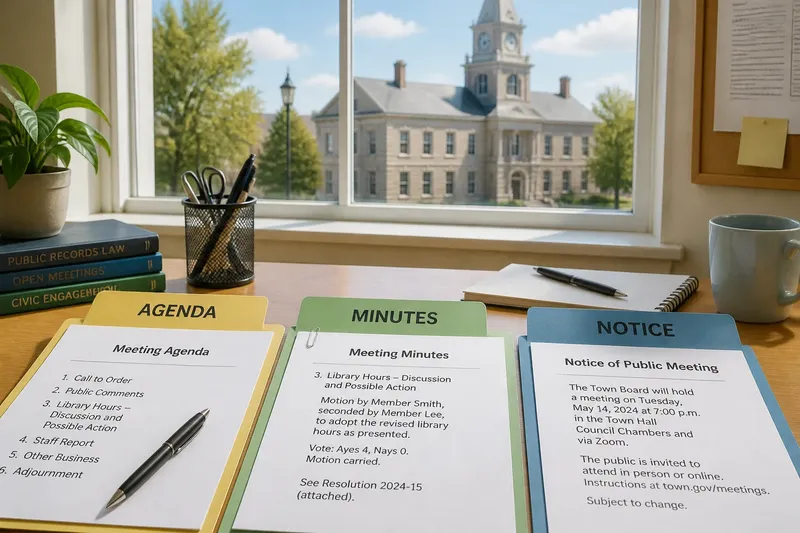
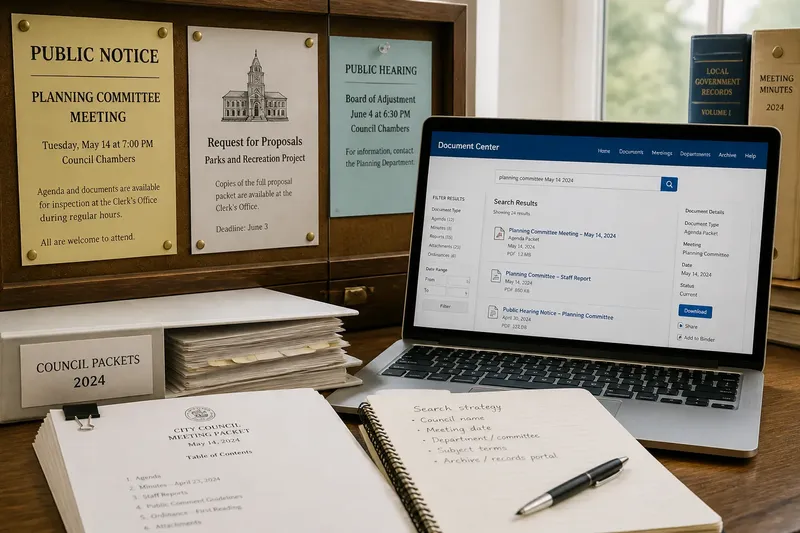
After the response period, look for documents linked from the notice or published by the responsible body. These might include a consultation summary, a committee paper, a decision notice, or meeting minutes. Document titles vary, so read the description and the text rather than relying on the title alone.
A summary may describe themes in submissions without stating what was decided. A paper may ask a committee to consider an option, while minutes or a formal notice may record what that body did. Check who authored the document, who had authority to act, and whether the wording describes a completed action or a matter still under consideration.
Compare the later record with the notice: does it address the consultation’s stated questions, describe how comments were handled, and identify any next stage? If a point is not mentioned, that alone does not establish why. The institution’s published process or a direct inquiry may clarify where the explanation is recorded.
Save the notice and the later record together so their relationship remains clear.
What should you look for in a consultation record?
Does a response summary include every submission?
Not necessarily; a summary may combine similar comments or describe themes instead of reproducing individual submissions. Check the document’s explanation of its method and whether it links to any fuller record.
Can I comment if my concern falls outside the listed questions?
First check whether the notice allows comments beyond its prompts. If it does, explain how your point relates to the stated subject; if it does not, use the institution’s listed contact route to ask where the concern belongs.
How do I tell whether a later document records an action?
Look for the responsible body, the wording of the action, and any stated approval or next step. If the document only describes an option or asks another body to consider it, look for the later record that confirms what happened.
What can I do if I cannot find a response summary?
Follow the links and document references in the consultation notice, then check the responsible body’s published records. If the trail remains unclear, ask the institution where it records the handling of submissions.
Follow the consultation record from invitation to outcome
A public consultation notice is useful for understanding the subject, the questions, and the route for commenting. The later records help show how the institution documented the process and what happened after submissions closed. Read each document for the job it performs rather than assuming one notice or report tells the whole story.
For a public consultation, keep the original notice, your submitted response, and any later summary or decision record together. That simple file makes it easier to check whether the later documents address the questions the institution originally put to the public.